
The goal was to create a complete second dwelling that preserved privacy while maintaining a polished residential presence.
Case Study
Detached ADU
A detached backyard ADU designed to feel independent, refined, and naturally connected to the property.
Detached ADU
Design-Build Planning
Orange County
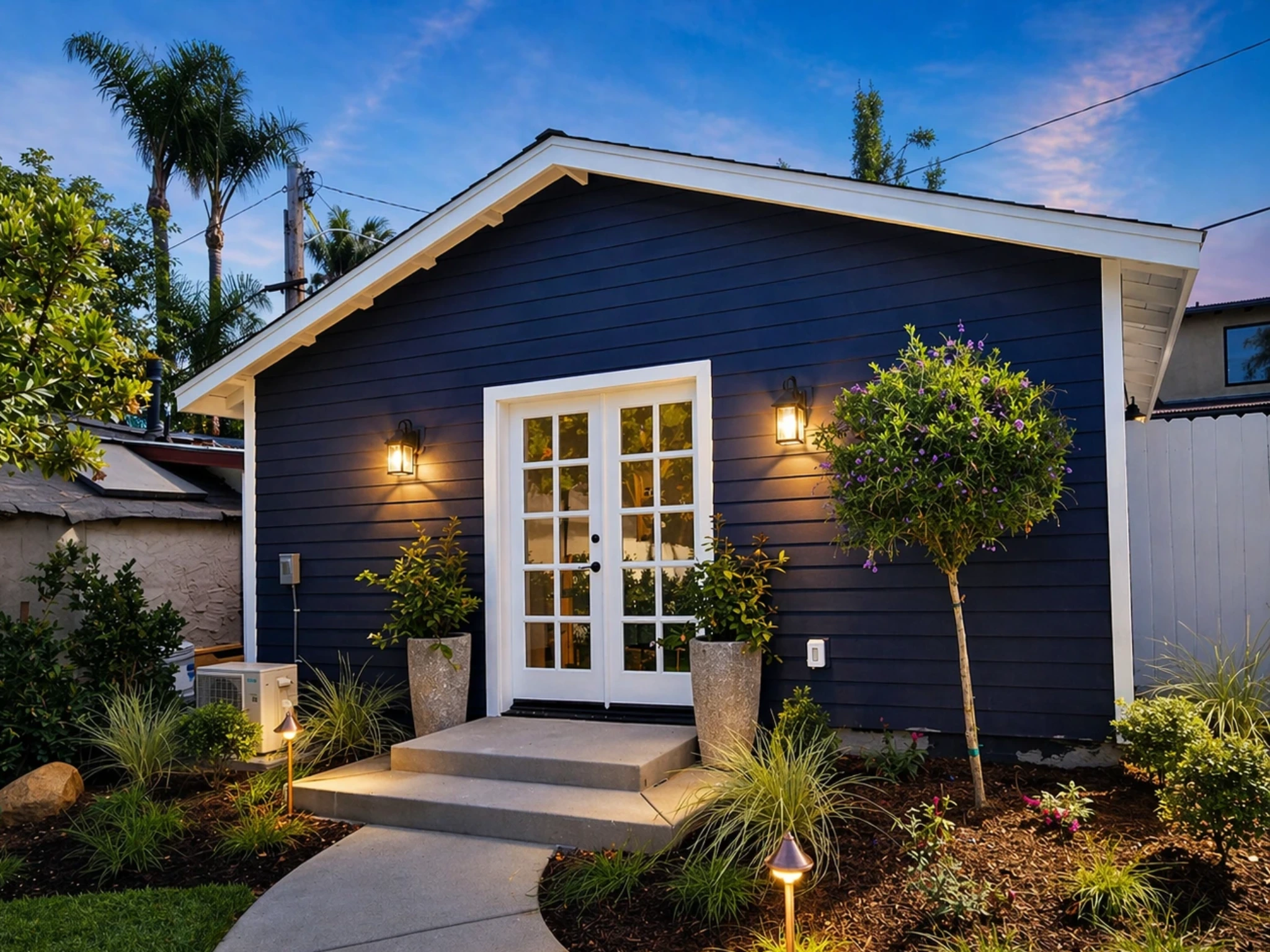
A detached design strategy allowed the ADU to operate as its own living environment with a private entry, strong exterior identity, and flexible use over time.
The result is a long-term asset that can support guest use, family housing, rental flexibility, or future resale positioning.
Start your project
Want to explore a similar ADU for your property?
We help homeowners evaluate site potential, compare ADU types, and move from concept to construction with one coordinated team.
Helpful ADU resources
Detached ADU planning that starts with the lot
A successful detached ADU depends on placement, privacy, access, utilities, natural light, and a layout that works for the intended use.
Detached ADU details
What makes a detached ADU work well
A detached ADU succeeds when the building placement, outdoor space, windows, access route, utility path, and privacy are planned together. The goal is to create a useful separate unit without overwhelming the backyard or disrupting the main home.
Placement
Good placement balances setbacks, yard usability, privacy, sunlight, and a clear path from the street or driveway.
Layout
Compact floor plans need smart storage, efficient kitchens, comfortable bathrooms, and natural light to feel livable.
Construction
Foundation, framing, utilities, drainage, and finish choices should be coordinated before construction starts.
Homeowners should also think about how the detached ADU will be used over time. A unit designed for a parent, adult child, guest, or renter may need different storage, entry, lighting, bathroom, and privacy decisions. Planning for those uses early creates a more durable long-term result.